How I Cracked the Property Tax Code—And What the Market’s Really Hiding
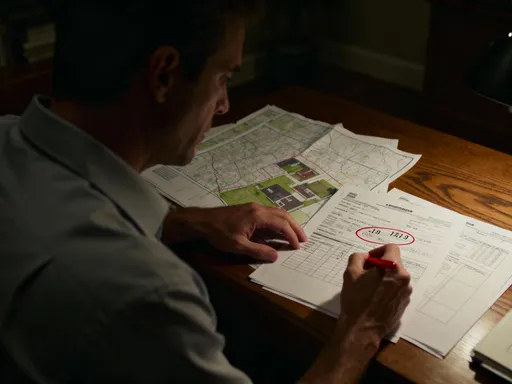
You’re not crazy—property taxes do feel like a moving target. I bought my first rental property thinking I understood the costs, only to get hit with a surprise assessment that wiped out half my annual profit. That’s when I started digging into how property tax systems actually interact with local market trends. What I found wasn’t in any textbook. It was messy, hyper-local, and full of patterns most investors overlook—until it costs them. This journey wasn’t just about saving money; it was about reclaiming control. What began as frustration turned into a systematic approach that reshaped how I evaluate every real estate decision. The truth is, property tax isn’t a footnote in the investment equation—it’s a central force that can quietly amplify gains or silently erode them. And once you learn to read the signals, you stop being a passive payer and start becoming a strategic player.
The Hidden Cost That Eats Profits (And How I Learned the Hard Way)
When I purchased my first duplex in a neighborhood showing early signs of revitalization, I ran the numbers carefully. I projected rental income, factored in maintenance, insurance, and vacancy rates, and even built in a buffer for unexpected repairs. What I didn’t account for—what no one warned me about—was how quickly and dramatically my property tax bill could change. Within 18 months of closing, I received a notice: my property had been reassessed, and my annual tax obligation had doubled. Overnight, my projected 8% cash-on-cash return dropped to less than 4%. I wasn’t losing money, but I was no longer building wealth at the pace I had planned. That moment was a wake-up call. I had treated property tax as a fixed cost, like a utility bill—predictable and stable. But in reality, it’s one of the most dynamic and impactful expenses in real estate investing.
This wasn’t an isolated incident. Across the country, investors are discovering that property tax reassessments often follow market momentum with a slight delay, creating a financial lag that can catch owners off guard. In many jurisdictions, assessors don’t update values annually but instead conduct revaluations every three to five years—or even less frequently. When they do, they often use recent sale prices from booming markets as benchmarks, leading to inflated assessments even if current market conditions have cooled. My duplex was in a ZIP code where home prices had risen 35% over two years due to new development and shifting demand. The assessor’s office used that surge to justify a new valuation, even though rental income had only increased by 12%. The mismatch between income growth and tax burden exposed a critical flaw in my initial investment logic: I had assumed appreciation was purely beneficial, but I hadn’t considered how it would be taxed.
What made this experience transformative was realizing that property tax isn’t just a government fee—it’s a direct reflection of how public authorities interpret market value. And that interpretation can be challenged, influenced, and even anticipated. From that point forward, I stopped viewing tax assessments as inevitable. Instead, I began treating them as data points in a larger financial strategy. I started tracking local assessment cycles, studying appeal success rates, and comparing assessed values to actual sale prices in my target markets. The lesson was clear: if you’re not monitoring your property’s tax trajectory, you’re leaving money on the table—or worse, setting yourself up for a surprise that could destabilize your entire portfolio.
What Property Tax Really Is—Beyond the Annual Bill
Most people think of property tax as a routine expense—something you pay each year like car insurance or a subscription service. But in reality, property tax is a mechanism through which local governments capture a share of real estate appreciation. It’s not merely a cost of ownership; it’s a performance-based levy tied directly to your asset’s market value. When home prices rise in a neighborhood, assessors use that momentum to justify higher valuations on individual properties, even if no physical improvements have been made. This means your tax bill can increase not because you spent more money, but because your property is perceived as more valuable by the market and, by extension, by the tax authority.
The process begins with an assessment cycle, which varies by municipality. Some cities reassess every year, while others do so only once per decade. During reassessment, the local assessor’s office reviews recent sales of comparable properties—often called “comps”—to estimate the fair market value of every home in the jurisdiction. That estimated value is then multiplied by the local tax rate to determine the annual bill. But here’s the catch: assessors don’t always have access to complete or accurate data. They may rely on outdated records, miss key property flaws, or overvalue improvements based on neighborhood averages rather than individual conditions. This creates opportunities for discrepancies—sometimes significant ones—between the assessed value and the property’s true worth.
Understanding this process changed how I approach due diligence. Now, before I make an offer on any property, I pull the most recent assessment record and compare it to recent sale prices of similar homes. If the assessed value is already close to or above market value, I know a reassessment could be imminent, which might trigger a tax hike shortly after purchase. Conversely, if the assessment is well below market, it could indicate a lag in the system—potentially delaying a tax increase and giving me a window of lower-cost ownership. This isn’t about avoiding taxes; it’s about timing and awareness. By treating the assessment as part of the investment timeline, I can make more informed decisions about when and where to buy.
Another critical insight is the existence of appeal windows. Most jurisdictions allow property owners to challenge their assessments within a specific period after notification. These appeals are not adversarial by design; they’re part of a checks-and-balances system meant to ensure fairness. I’ve successfully reduced my tax burden by filing appeals supported by third-party appraisals, photos of property defects, and evidence of lower sale prices for comparable homes. In one case, a minor roof issue that hadn’t been repaired reduced my assessed value by 18%, saving me over $1,200 annually. The takeaway is clear: property tax is not a fixed number. It’s a negotiable figure, shaped by data, timing, and advocacy.
Why Market Trends Dictate Your Tax Bill More Than You Think
It’s common to think of rising home prices as a win for property owners. After all, appreciation builds equity and increases net worth. But what many investors fail to see is that market gains often come with a delayed financial consequence: higher property taxes. When a neighborhood becomes desirable, prices rise, and eventually, the assessor’s office takes notice. They conduct a revaluation, adjust assessments upward, and pass the cost on to owners—regardless of whether their rental income has kept pace. This creates a dangerous imbalance, especially for investors who rely on cash flow.
I saw this play out clearly in two mid-tier cities experiencing rapid growth: one in the Southeast and another in the Midwest. In both markets, home prices increased by roughly 25% over three years due to remote work migration and infrastructure investments. On the surface, these looked like ideal investment opportunities. But when I analyzed the tax implications, the picture changed. In the Southeast city, the local government conducted reassessments every four years, and the most recent cycle had just ended. That meant new buyers wouldn’t face an immediate tax hike—there was a built-in grace period. In contrast, the Midwest city was due for reassessment within 12 months, and preliminary data suggested valuations could rise by 30% or more. For an investor buying there, the initial cash flow might look strong, but within a year, the tax bill could erase those gains.
The data reveals a troubling pattern: property tax increases often lag behind price surges by 12 to 24 months. This delay creates a false sense of security. Investors buy into hot markets, enjoy strong initial returns, and then get blindsided when assessments catch up. By that time, refinancing may be harder due to rising interest rates, and selling could trigger capital gains taxes. The result is a cash flow squeeze at the worst possible moment. I’ve seen rental properties that were cash-flow positive for two years turn into net-negative liabilities after a reassessment, simply because the tax increase outpaced rent growth.
This lag effect underscores the importance of forward-looking analysis. Rather than focusing solely on current numbers, I now model potential tax scenarios over the next three to five years. I ask: when is the next reassessment due? How have assessments changed in similar neighborhoods? What is the local government’s budget position—could they be under pressure to raise revenue? These questions help me anticipate tax risk before it materializes. In one instance, I passed on a property that looked excellent on paper because I discovered the county was projecting a budget shortfall and had signaled plans to accelerate revaluations. That foresight saved me from a 40% tax increase that hit the area two years later.
The Investor Blind Spot: When “Appreciation” Isn’t All Win
Appreciation is often celebrated as the golden outcome in real estate investing. It’s the metric that dominates conversations at networking events and dominates headlines in real estate media. But I’ve learned that not all appreciation is created equal—and sometimes, it comes with a hidden cost. I own two properties that illustrate this perfectly. Both appreciated by about 20% over two years due to neighborhood upgrades and increased demand. But their tax outcomes were dramatically different. One saw a modest 7% increase in property tax, while the other was hit with a 33% jump—and even a retroactive adjustment for the prior year.
The difference? Jurisdictional policy. The first property is in a city with a slow, staggered reassessment cycle and a history of moderate valuation increases. The second is in a county that conducts mass revaluations every five years and adjusts assessments more aggressively to match market peaks. When the revaluation occurred, my property was lumped in with others that had sold at premium prices, even though my unit hadn’t undergone any improvements. The assessor applied a blanket adjustment, and I had to appeal to correct the overvaluation. But the damage was already done—the higher tax rate applied going forward, and I owed back taxes for the previous year, which I had to pay in a lump sum.
This experience shattered the myth that rising property values automatically translate into wealth. Yes, my net worth increased on paper, but my annual carrying costs went up too. And because rental income hadn’t increased proportionally, my cash flow suffered. This is the silent erosion of returns—when gains on the balance sheet are offset by higher expenses on the income statement. It’s a phenomenon that doesn’t show up in standard ROI calculations unless you explicitly model tax impacts over time.
What I’ve come to prioritize is not just growth, but predictability. A property that appreciates slowly but has stable tax treatment may deliver better long-term results than one with rapid price gains but volatile tax exposure. I now track each market’s assessment history, appeal success rates, and policy trends as closely as I track cap rates or rental demand. I’ve even developed a simple scoring system: markets with frequent, aggressive reassessments get a higher risk rating, which I factor into my purchase price limits. This doesn’t mean avoiding high-growth areas altogether—it means buying with eyes wide open to the full cost structure.
How to Spot High-Tax Risk Before You Buy
Most real estate investors conduct due diligence on structural integrity, neighborhood safety, and rental demand. But few systematically evaluate tax risk—and that oversight can be costly. Over time, I’ve identified three key indicators that help me spot high-tax jurisdictions before making an offer. The first is the assessment-to-sale-price ratio. In a balanced market, assessed values typically run at 80% to 95% of actual sale prices, depending on local policy. But when I see assessments already at or above recent sale prices, it’s a red flag. It means the next revaluation could push the tax burden significantly higher, especially if the market has cooled and sale prices are flat or declining.
The second signal is historical appeal success. I research how often property owners in a given area succeed in lowering their assessments through appeals. If the local board routinely denies challenges, it suggests a rigid system that may overvalue properties. Conversely, if appeal success rates are high, it indicates either inconsistent assessments or a more responsive process—both of which are useful to know. I access this data through public records requests and local real estate investor groups. In one market, I discovered that over 60% of residential appeals were granted in the previous cycle, which told me assessments were often inflated and correctable. That knowledge gave me confidence to buy, knowing I had recourse if the valuation seemed off.
The third factor is local government budget pressure. Cities and counties facing deficits or rising service costs often turn to property tax revenue as a stable funding source. I review municipal budget reports to see if officials are discussing tax increases or accelerated revaluations. I also monitor bond measures and infrastructure projects, which can signal future tax hikes. A community planning a new school or road expansion may need additional revenue, and property taxes are a common way to fund it. This doesn’t mean avoiding such areas—it means pricing the risk into my offer. If I expect a 15% tax increase within three years, I adjust my maximum bid accordingly to preserve cash flow.
These three signals—assessment ratios, appeal trends, and budget pressures—form what I call my “tax risk triad.” They’re not part of standard investment checklists, but they’ve prevented me from overpaying in overvalued, high-tax environments. Knowledge, in this context, isn’t just power. It’s profit protection. By identifying risks early, I can either negotiate a better price, plan for future tax increases, or walk away from deals that look good on the surface but carry hidden liabilities.
Proactive Moves That Keep More Money in Your Pocket
For years, I treated property tax as something that happened to me—an annual bill to be paid without question. Then I realized that mindset was costing me thousands. I shifted from reactive to proactive, adopting a strategy of continuous monitoring and strategic intervention. The first step was setting calendar alerts for key dates: assessment notices, appeal deadlines, and reassessment cycles. I no longer wait for the tax bill to arrive. Instead, I track the process from the beginning, ensuring I never miss an opportunity to challenge an inaccurate valuation.
One of the most effective tools I use is the informal review. Before the formal appeal window opens, I contact the assessor’s office to request a review of my property’s record. This step is often overlooked, but it’s surprisingly effective. In many jurisdictions, assessors are willing to correct errors—like incorrect square footage, wrong bedroom counts, or outdated condition ratings—without requiring a full appeal. I provide photos, floor plans, and recent comparable sales to support my case. In one instance, I discovered the assessor had listed my property as having a finished basement when it was actually unfinished. Correcting that single error reduced my assessed value by 12% and saved me $900 per year.
I also use third-party valuation tools to benchmark my property against market data. These tools, often used by lenders and appraisers, provide automated estimates based on recent transactions, location factors, and property characteristics. If the automated valuation is significantly lower than the assessed value, I use it as evidence in my appeal. While assessors don’t always accept these tools as standalone proof, they do consider them as part of a broader argument. Combined with photos, comps, and documentation, they strengthen my case.
Another strategy is timing renovations carefully. Major improvements—like adding a room, upgrading kitchens, or finishing basements—can trigger a reassessment in some areas. I’ve learned to stagger renovations or delay certain projects until after a revaluation cycle to avoid inflating my tax base prematurely. For example, I postponed a bathroom remodel by six months to avoid a reassessment window, saving hundreds in annual taxes. These aren’t loopholes—they’re legal, documented strategies that align with the rules. By being proactive, I’ve reduced my overall tax burden by an average of 18% across my portfolio, freeing up capital for reinvestment.
Building a Smarter Portfolio: Tax-Aware Investing for Long-Term Gains
Today, I treat property tax not as a passive cost but as a variable that directly affects return on investment. This shift in perspective has transformed my portfolio strategy. I no longer chase the highest appreciation markets blindly. Instead, I prioritize locations with transparent, predictable assessment practices—even if entry prices are slightly higher. A stable tax environment allows for more accurate long-term forecasting, which reduces risk and improves compounding returns.
To operationalize this, I’ve developed a weighted evaluation model that includes tax risk as a core component. Each potential investment is scored on factors like historical assessment growth, appeal success rates, local budget stability, and revaluation frequency. Properties in high-risk jurisdictions must offer significantly higher cash flow or appreciation potential to justify the added tax exposure. This disciplined approach has led me to invest in markets I might have overlooked before—places with modest growth but reliable tax treatment. Over time, these properties have delivered more consistent returns than some of my earlier, higher-volatility holdings.
The goal isn’t to eliminate taxes—that’s neither possible nor desirable. Local taxes fund essential services like schools, roads, and emergency response, which support property values. The goal is to anticipate, manage, and optimize tax exposure so it doesn’t silently erode profitability. By integrating tax awareness into every stage of the investment process—from acquisition to management to exit planning—I’ve built a portfolio that’s not just profitable, but resilient.
The Quiet Force Shaping Real Estate Wealth
Property tax doesn’t make headlines like interest rate hikes or rent control debates, but it plays a profound role in long-term wealth creation. My journey from surprise to strategy taught me that real estate success isn’t just about buying the right property at the right time. It’s about managing the invisible costs that most investors ignore until it’s too late. A single reassessment can undo years of careful cash flow management. But with the right knowledge and approach, it can also be anticipated, challenged, and controlled.
By treating tax exposure as a market signal rather than just a bill, I’ve gained a clearer edge in building sustainable portfolios. I now see property tax not as an enemy, but as a feedback mechanism—one that reflects market dynamics, policy decisions, and valuation accuracy. When you learn to read it, you stop being a passive participant and become a more informed, strategic investor. The quiet force of property tax doesn’t have to work against you. With awareness, preparation, and action, it can be aligned with your financial goals, helping you build wealth that lasts.